
Why Understanding the Remodel Timeline Matters
A whole-home remodel is one of the most significant investments you can make in your property. For homeowners in Rancho Santa Fe, where homes often feature distinctive architectural details and premium finishes, the process involves careful coordination across multiple trades, materials, and design decisions. Without a clear understanding of what lies ahead, even the most exciting renovation can start to feel overwhelming.
Knowing the general phases of a whole-home remodel — and what happens during each one — puts you in control. You'll know when decisions need to be made, when disruptions are heaviest, and when you can finally start to see your vision come to life.
Phase 1: Design and Planning (4–8 Weeks)
Every successful remodel begins long before a single wall is touched. During the design and planning phase, you'll work with your contractor and, in many cases, an architect or designer to define the scope of work, establish a budget, and create detailed plans for every room being renovated.
For Rancho Santa Fe homes, this phase often includes:
- Evaluating the existing structure and identifying any limitations or opportunities
- Selecting a design direction that complements the home's architectural style
- Creating floor plans, elevations, and 3D renderings
- Choosing preliminary materials, fixtures, and finishes
- Establishing a realistic budget with contingency built in
This is also the time to discuss how you'll live during the remodel. Some homeowners choose to stay in the home, while others relocate temporarily — especially during a full-home renovation where kitchens and bathrooms will be out of commission.
Phase 2: Permitting and Approvals (2–6 Weeks)
Rancho Santa Fe has specific guidelines and review processes that can affect your remodel timeline. Depending on the scope of your project, you may need permits from the County of San Diego as well as approval from the Rancho Santa Fe Association's Art Jury, which reviews exterior modifications to ensure they align with the community's covenant.
Your contractor should handle the permitting process on your behalf, but it's important to understand that this step takes time. Permit review timelines vary based on project complexity and current workloads at the reviewing agencies. A knowledgeable local contractor will anticipate these requirements and build them into the overall schedule.
What Can Cause Delays?
- Incomplete or inaccurate permit applications
- Design revisions requested by the Art Jury or county reviewers
- Structural engineering requirements that weren't anticipated
Patience during this phase pays off. Proper permitting protects your investment and ensures your remodel meets all local building codes.
Phase 3: Demolition and Structural Work (2–4 Weeks)
Once permits are in hand, the physical transformation begins. Demolition is often the most dramatic — and the most disruptive — phase of a whole-home remodel. Walls come down, old fixtures are removed, and the home is stripped back to its structural bones where necessary.
During this phase, your contractor may also discover hidden issues such as outdated wiring, plumbing that doesn't meet current code, or water damage that wasn't visible before demolition. A reputable contractor will communicate these findings promptly and present options for addressing them without derailing the project.
Any structural modifications — removing load-bearing walls, adding support beams, or reinforcing the foundation — happen during this stage as well.
Phase 4: Rough-In Work (3–5 Weeks)
With the structure exposed, the mechanical trades move in. Electricians, plumbers, and HVAC technicians install or reroute systems behind the walls before everything gets closed up. This is the unglamorous but critically important backbone of your remodel.
Key activities during rough-in include:
- Running new electrical circuits and upgrading the panel if needed
- Installing or relocating plumbing supply and drain lines
- Ductwork modifications for heating and cooling
- Low-voltage wiring for smart home systems, audio, and networking
- Insulation installation
Inspections are required at this stage before walls can be closed. Your contractor will schedule these with the county and ensure everything passes before moving forward.
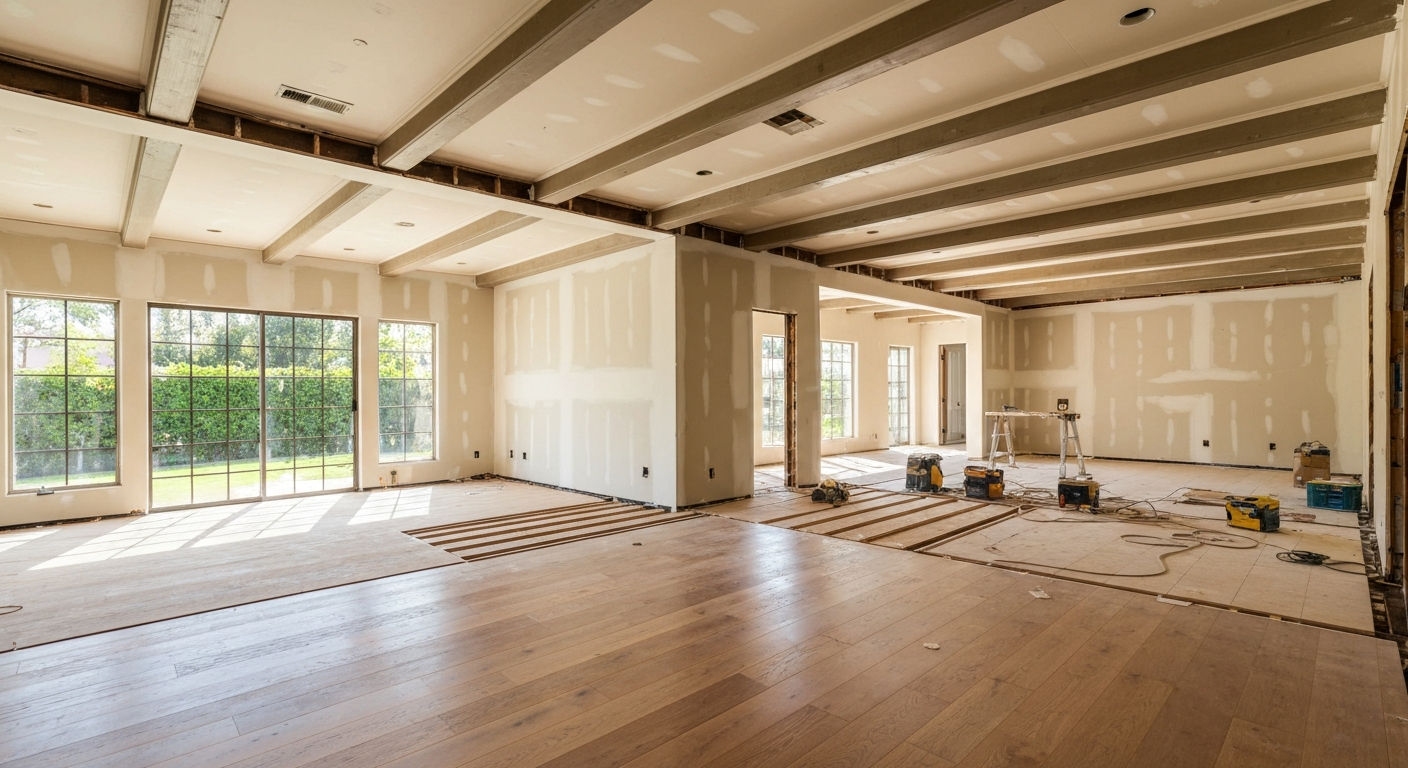
Phase 5: Drywall, Finishes, and Detail Work (6–10 Weeks)
This is where your remodel truly starts to take shape. Once the rough-in work passes inspection, drywall goes up and the finishing process begins. For most homeowners, this is the most rewarding phase because you can finally see the space coming together.
The finishing phase typically follows this general sequence:
- Drywall installation, taping, and texturing — The walls and ceilings are completed and prepared for paint.
- Cabinetry and built-ins — Kitchen cabinets, bathroom vanities, and custom storage are installed.
- Tile and stone work — Backsplashes, shower surrounds, and flooring are laid.
- Hardwood or other flooring — Floors are installed or refinished throughout the home.
- Painting — Interior walls, trim, and ceilings receive their final coats.
- Fixture and hardware installation — Lighting, plumbing fixtures, door hardware, and appliances go in.
- Countertop fabrication and installation — Stone or quartz countertops are templated and installed, usually after cabinetry is in place.
In Rancho Santa Fe, where homeowners often select high-end materials like natural stone, custom cabinetry, and specialty hardware, lead times for materials can extend this phase. Ordering selections early — ideally during the design phase — helps keep the project on schedule.
Phase 6: Final Inspections and Walkthrough (1–2 Weeks)
Before your contractor hands you the keys to your newly remodeled home, final inspections must be completed and passed. The county inspector will verify that all work meets building codes and matches the approved plans.
After inspections, you'll do a detailed walkthrough with your contractor. This is your opportunity to note any items that need touch-ups, adjustments, or corrections — commonly called a punch list. A thorough contractor will address every item on the punch list promptly and professionally before considering the project complete.
How Long Does a Whole-Home Remodel Take in Total?
For a comprehensive whole-home remodel in Rancho Santa Fe, homeowners should expect a timeline of roughly five to nine months from the start of design to final completion. Larger or more complex projects — those involving additions, significant structural changes, or extensive custom work — can extend to twelve months or more.
Several factors influence the timeline:
- Scope of work: More rooms and more changes mean more time.
- Material lead times: Custom and imported materials often require longer waits.
- Permitting: Local review processes add time that's largely outside your control.
- Decision-making: Delays in selecting finishes or approving changes can stall progress.
- Weather: While San Diego's climate is generally favorable, exterior work can be affected by rain.
Setting Yourself Up for a Smooth Remodel
The best thing you can do as a homeowner is partner with a contractor who communicates clearly, sets realistic expectations, and has deep experience working in your community. At Ravenwood Building Contractors, we guide Rancho Santa Fe homeowners through every phase of the remodeling process with transparency and craftsmanship. When you understand what's coming next, you can focus on the exciting part — watching your home become everything you've imagined.